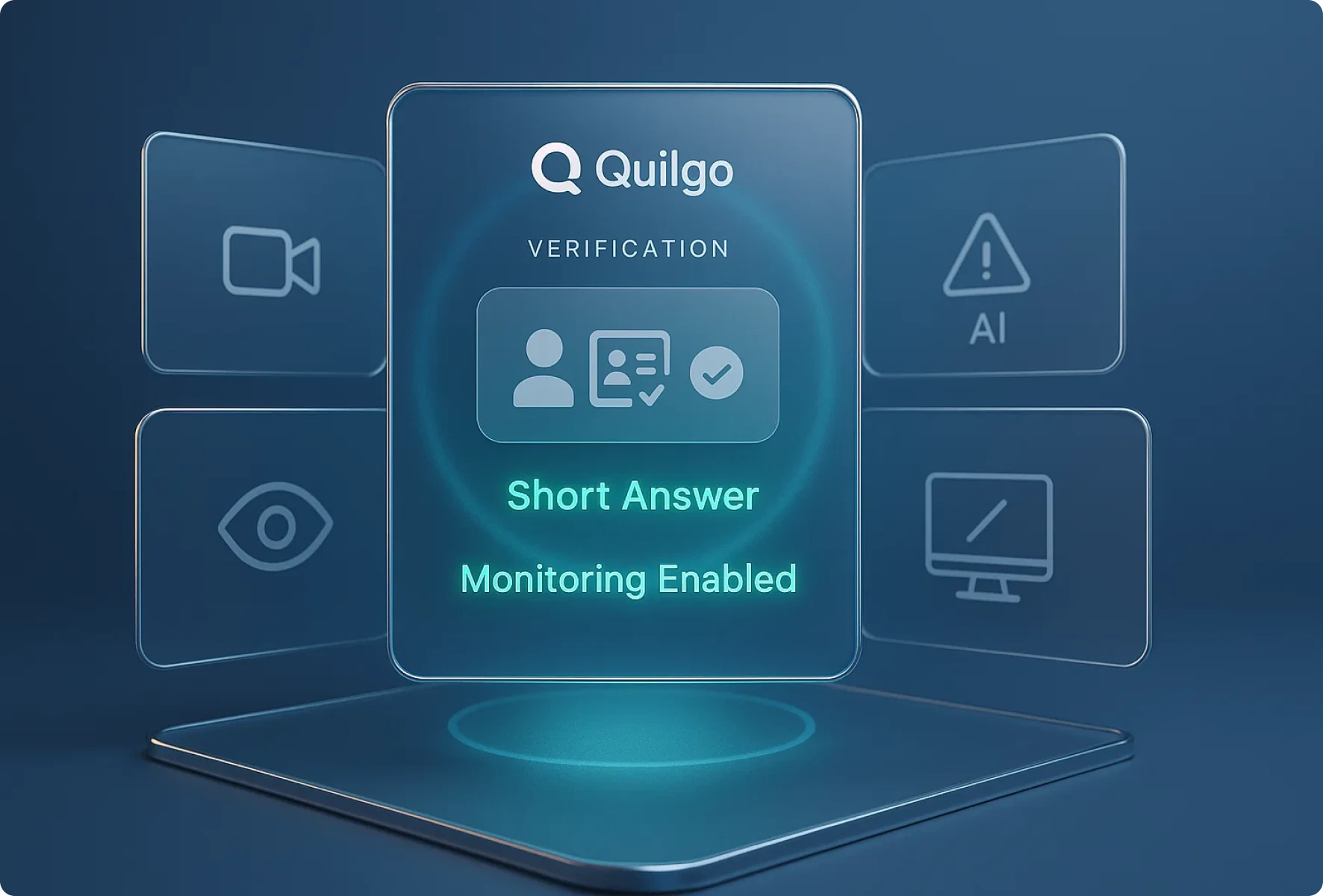

Online exam proctoring service
Online exam proctoring is transforming the way assessments are conducted. It ensures academic integrity in a digital world.
With the rise of remote learning, the demand for secure online assessments has surged. Institutions need reliable solutions to monitor exams effectively.
Proctoring software for online exams uses advanced technology. It combines AI and human oversight to prevent cheating.
Automated online exam proctoring offers flexibility and scalability. It accommodates various exam types and supports global test-takers.
Understanding what online exam proctoring entails is crucial. It helps institutions maintain credibility and fairness in their assessments.
What is Online Exam Proctoring?
Online exam proctoring is a method of monitoring online exams. It ensures that test-takers adhere to academic guidelines. By using technology, this process deters cheating and maintains exam integrity.
Proctoring is now vital due to the increase in online education. It guarantees that remote assessments are as secure as in-person ones. This method uses a combination of software tools and professional oversight.
A typical online proctoring setup might include:
- Video surveillance to observe the test-taker.
- Audio monitoring to catch unauthorised help.
- Screen recording to track any forbidden actions.
The approach can be automated, live, or recorded. Automated proctoring uses AI to flag suspicious behaviour. Meanwhile, live proctoring involves a human supervisor watching in real-time.
This type of monitoring offers educational institutions peace of mind. They know the process supports fairness and credibility. Online exam proctoring protects not only the integrity of the exam but also the institution's reputation.
Types of Online Exam Proctoring Services
Various online exam proctoring services offer distinct approaches. Each type suits different needs and scenarios. The common types include live proctoring, recorded proctoring, and automated proctoring.
Live proctoring involves a human proctor monitoring the exam in real-time. This approach provides immediate intervention if issues arise. It's akin to having an invigilator during traditional exams. However, it might require more resources.
Recorded proctoring captures the exam session on video for later review. The footage is analyzed for any irregularities post-exam. This method saves on real-time monitoring costs but requires time for review.
Automated proctoring utilizes AI technology to detect suspicious behavior. Algorithms can identify anomalies and alert administrators. This service works well for large-scale assessments without extensive human involvement.
Here’s a quick overview:
- Live Proctoring: Real-time human monitoring.
- Recorded Proctoring: Post-exam video analysis.
- Automated Proctoring: AI-driven anomaly detection.
Institutions can choose a method or combine them based on their requirements. Each type offers unique advantages for different contexts.
How Online Exam Proctoring Software Works
Online exam proctoring software blends AI and human oversight. Its primary goal is ensuring exam integrity. The software begins by verifying the student's identity. This often involves biometric methods, such as facial recognition.
Once the identity is verified, the monitoring process starts. The software records video, audio, and screen activity. This creates a comprehensive view of the test environment. It ensures that students do not use unauthorised materials.
The software uses algorithms to detect unusual behaviour. This includes noticing excessive head movements or unexpected background noise. These indicators flag potential academic dishonesty.
Typically, the software can integrate with learning management systems (LMS). This seamless integration allows for a smooth exam setup.
Here's a brief overview of the features:
- Identity Verification: Ensures the correct person is taking the test.
- Environment Monitoring: Uses video, audio, and screen capture.
- AI Detection: Identifies suspicious activities.
- LMS Integration: Simplifies exam administration.
This combination offers a robust solution for secure online assessments.
Key Features of Proctoring Software for Online Exams
Proctoring software for online exams includes multiple key features designed to maintain exam credibility. Identity verification is crucial. It ensures that the student taking the test is the one registered.
Another essential feature is environment monitoring. This monitors the test-taker's surroundings using video and audio. It checks for any unauthorised materials or people present during the exam.
AI-driven analytics add a layer of security. The software uses patterns to identify cheating. Suspicious behaviours are flagged for review. This helps maintain a fair testing atmosphere.
Here's a recap of key features:
- Identity Verification: Confirms test-taker identity.
- Environment Monitoring: Video and audio surveillance.
- AI Analytics: Detects and flags unusual activities.
Such features collectively foster a secure testing environment, crucial for maintaining academic standards.
Benefits of Secure Online Assessments
Secure online assessments provide numerous advantages for educational institutions and learners alike. They offer flexibility for both students and instructors. This flexibility allows exams to be taken at suitable times, accommodating varying schedules.
Additionally, such assessments bolster academic honesty. By reducing opportunities for cheating, online proctoring helps preserve the value of earned credentials. This, in turn, enhances the reputation of educational programs.
Moreover, secure online assessments optimise resource allocation. They eliminate the need for physical exam spaces and in-person proctors. This results in significant cost savings.
Notable benefits include:
- Enhanced flexibility in scheduling
- Strengthened academic integrity
- Improved resource management
These benefits highlight why many institutions are adopting secure online testing methods. They are crucial for maintaining quality and credibility in education.
Addressing Privacy and Security Concerns
Privacy and security are significant considerations in online exam proctoring. Institutions must ensure that students' personal data is protected. Strict adherence to data protection laws is essential.
Transparency is key to addressing these concerns. Informing students about data collection and usage can build trust. Clear communication reduces anxiety over privacy issues.
Moreover, proctoring software must use robust security measures. This includes encryption and secure data storage. By prioritising security, institutions protect both their reputation and students' rights.
Essential privacy and security practices include:
- Compliance with data protection regulations
- Transparency in data handling
- Use of encryption technologies
Addressing these concerns helps maintain a fair and secure testing environment. This bolsters confidence in online proctoring systems.
Choosing the Right Online Exam Proctoring Service
Selecting the best online exam proctoring service requires careful consideration. It's essential to evaluate your institution's specific needs. Look for features that align with your testing requirements.
Understanding different proctoring options can simplify this decision. Some services offer live proctoring, while others provide automated solutions. Consider which method best suits your exams.
Cost-effectiveness and user experience are also crucial factors. Ensure that the service is compatible with your existing systems. Additionally, verify support availability for students and instructors.
Key considerations when choosing a proctoring service include:
- Compatibility with learning management systems
- Flexibility of proctoring options
- Cost and support services
Making an informed choice will enhance the integrity and security of your exams. This ensures a positive experience for all involved.
Conclusion
In today’s digital learning environment, online exam proctoring is essential for maintaining fairness and integrity in remote assessments. These solutions help ensure that evaluations remain transparent and trustworthy, even outside the traditional classroom setting.
When selecting the right tools, it is essential to consider more than just security. Institutions are increasingly seeking platforms that balance reliability with a smooth user experience for both educators and students.
One effective solution is Quilgo, a platform designed to support secure online assessments while keeping the process simple and intuitive. With streamlined workflows, intelligent monitoring, and seamless integration, Quilgo enhances the online testing experience without introducing unnecessary complexity.
By adopting modern proctoring tools like Quilgo, educational institutions not only strengthen exam integrity but also lay a solid foundation for high-quality digital education, both now and in the future.